Showing posts with label Marsh Harrier. Show all posts

Thursday, May 29, 2025

Dogger Bank 09-13 May 2025 - Spring migration on a windfarm

I spent about a week on the Dogger Bank C development and once again there were quite a few birds to see. Maybe it had something to do with the size of the vessel (MUCH larger than the usual ones I work on) but the "island effect" was obvious with a disproportionate number of "good" birds compared to the commoner species.

A female Marsh Harrier sivhauk turned up on the evening of the 10th May and was present again the following morning.

Good numbers of insects and moths seen - the birds took advantage of these and seemed to catch quite a lot.

Gannet havsule - small numbers most days

Kittiwake krykkje - small numbers most days

Fulmar havhest - small numbers a few times

Marsh Harrier sivhauk  - female seen 09-10.05

Kestrel tårnfalk - a female present on 10.05

Peregrine vandrefalk - one hunting around the vessel on 12.05. Not the first time I've seen these on Dogger Bank - it could be that these birds regularly hunt far offshore?

Wheatear steinskvett (one male on the helideck 09.05)

Robin rødstrupe - one turned up on 13.05

Common Redstart rødstjert - a male onboard 12-13.05

Black Redstart svartrødstjert - a cracking male was seen on 13.05

Pied Flycatcher svarthvit fluesnapper - a female turned up on 12.05 and stayed until the next day

Tree Pipit trepiplerke - one onboard 12-13.05

Swallow låvsvale - one on 11.05

Willow Warbler løvsanger - one onboard 12.05

Chiff-chaff gransanger (including singing birds and a potential tristis) 2+ present daily

Common Whitethroat tornsanger  11-12-05

Reed Warbler rørsanger 11-12.05


Male Black Redstart svartrødstjert

Chiff-chaff gransanger with tick


Female Marsh Harrier sivhauk

Female Pied Flycatcher svarthvit fluesnapper

Some Racing Pigeons brevdue turned up as they so often do

Male Common Redstart rødstjert

Reed Warbler rørsanger with a freshly caught moth - I saw it catch several during it's stay onboard

Tree Pipit trepiplerke


Tristis Chiff-chaff sibirgransanger candidate. Looked good in every way but I didn't hear it call
A rare spring sighting! Normally these are an autumn thing....


A couple of the moth species seen onboard
Answers on a postcard please:)
Angle Shades (thanks Alf Tore!)


Monday, April 29, 2024

Herdlevær and Tjeldstø 28 April 2024 - Taking things easy pays off

After some weeks of little physical activity it was time to let my body recover a bit - 0430 starts and the hike out to Skogsøy with a heavy rucksack is a good way to stay more or less in shape but after only two days I could feel it. I also thought that it would be a quiet day over the sea with the third day in a row of identical weather conditions - and there are other places than need some coverage.

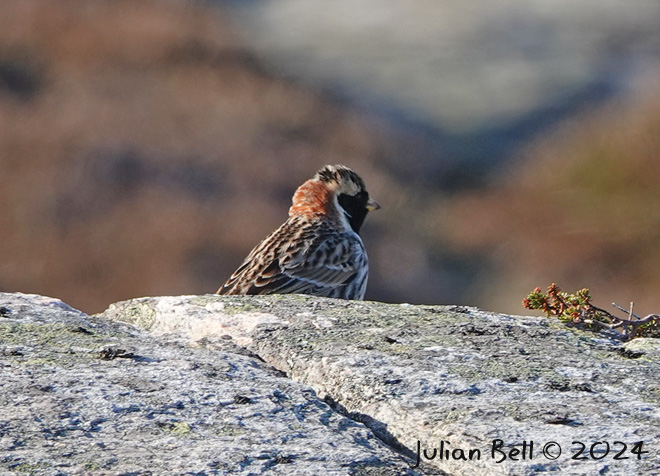
So I stayed in bed until 0700 and took a lazy walk at Herdlevær. Before I left the house I heard the first Cuckoo gjøk of  the year. Herdlevær turned out quite well with a cracking male Lapland Bunting lappspurv, a couple of Blackcap munk, a few Willow Warbler løvsanger and two Chiff-chaff gransanger among the sightings. A few Twite bergirisk, a noticeable increase in the numbers of Wheatear steinskvett and more meant this was a decent start to the morning.


Lapland Bunting lappspurv at Herdlevær

My plan was to have a look at the much neglected Tjeldstø on the way home, something that really paid off. An albifrons Whitefront tundragås had been found there earlier in the morning and was still present when I got there  - in the company of a couple of Greenshank gluttsnipe - both species are scarce in Øygarden during the spring. But my real reason to visit Tjeldstø was to have a look for some raptors. It didn't take long before a male Marsh Harrier sivhauk showed up. The Golden Eagle kongeørn put in an appearance and at least three White-tailed Eagle havørn showed up. A flock of 20 cracking summer plumaged Golden Plover heilo joined the usual selection of breeding waders in the reserve.


Some record shots of the Marsh Harrier sivhauk

albifrons Whitefront tundragås

Whitefront on the right and two Greenshank gluttsnipe just visible on the left

Marsh Harrier sivhauk is not even annual in Øygarden but has a definite peak in late April/early May. It is likely to be under recorded as most birders including myself tend to concentrate on seabird migration at this time

Wednesday, August 17, 2022

Øygarden 01-17 August 2022 - Nautnes ain't a bad place to be

 Work and family commitments meant there was even less birding than usual. This period reinforced the idea that I should actually bird more from my terrace. As I barely left the house with my binoculars it was home that gave the best results.

Having been slightly concerned regarding how few White-tailed Eagles havørn are about it was good to see two from the house almost daily - I have seen the eagles eating dead Gannets havsule and the sudden drop in the number of sightings gave some cause for concern.

The Oystercatcher tjeld pair that nested close to my house managed to get one young off as did the Common Sandpipers strandsnipe who seem to have managed at least one, probably two young this year.

I managed a few short seawatches at Skogsøy between 04.08 and 06.08. Oystercatchet tjeld and Common Gull fiskemåke were obviously very much on the move.

On 04 August 457 Oystercatcher tjeld and 377 Common Gull fiskemåke headed south. Other sightings included an Arctic Skua tyvjo and a couple of Red-throated Diver smålom. Of perhaps more interest were a few Tuna and a big pod of White-sided Dolphins - at least 50 fed offshore, possibly several times this number.

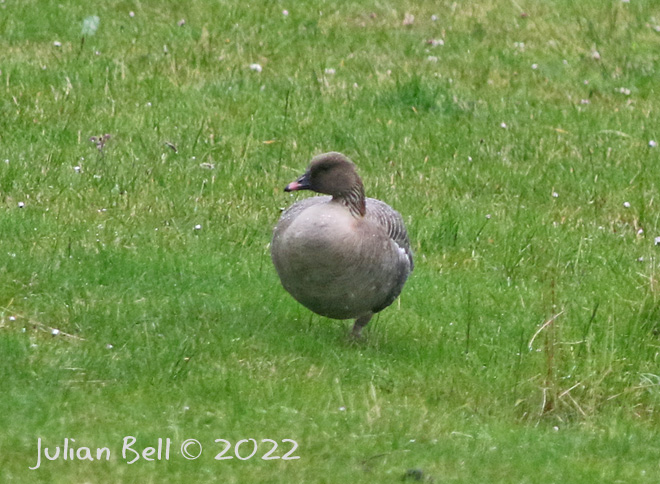
On the way home a Pinkfoot kortnebbgås turned up at Harkestand and at Husvatnet a Ruff brushane and a Swift tårnseiler put in an appearance. In the evening a Green Sandpiper skogsnipe flew over the house.

Pinkfoot kortnebbgås at Harkestad

Another seawatch of 05 August produced more of the same albeit in slightly smaller numbers. Other birds included six Shelduck gravand, a Black-headed Gull hettemåke and a Red-throated Diver smålom heading south as well as a hunting Peregrine vandrefalk.

On the way home a Swift tårnseiler was present at Husvatnet along with a couple of Lapwing vipe and a Sand Martin sandsvale.

Gannet havsule

Gannet havsule

Peregrine vandrefalk


Goldinch stillits were seen at both Tjeldstø and Nautnes, confirming that this speces has established a year-round presence in Øygarden and is no longer just a late autmn migrant and winter visitor.

A shorter seawatch on 06 August gave smaller numbers of the same along with a Fulmar havhest and a single Black Guillemot teist.

Five Tufted Duck toppand which included a number of first year birds may indicate that this species bred on Blomvatnet.

Swift tårnseiler at Tjeldstø

A single Whooper Swan sangsvane remained at Tjeldstø throughout the period - this species is not a usual species during the summer months.

Greylag Goose grågås migration was first noted on 08 August with a flock of 50 heading south during a fishing trip which filled up the bait shelf in my freezer with Mackerell:) A further eight species of fish were caught the following day, thus filling up the rest of my freezer with dinners.

Another guiding trip on 13 August had me leave the reservation again. Getting on for 60 species this time. At Herdla a Temminck's Stint temmeinkssnipe, a Green Sandpiper skosgsnipe, a Wood Sandpiper grønnstilk, a Lesser Spotted Woodpecker dvergspett, 15 Ruff brushane, three Black-tailed Godwit svarthalespove, 60 Snipe enkeltbekkassin, a decent movement of Greylags grågås, a Yellow Wagtail gulerle and plenty more besides.

The lower levels of Gullfjell gave a couple of Kestrel tårnfalk, Sparrowhawk spurvehauk, Willow Tit granmeis and Bullfinches dompap among other things.

On 15 August a calm morning in more ways than one gave the absolute highlight of the period with a female Marsh Harrier sivhauk coming in off the sea a flying past my house at Nautnes. At least two Kestrel tårnfalk and two White-tailed Eagles havørn were also seen along with Bar-tailed Godwit lappspove, flocks of Common Crossbill grankorsnebb, Goldfinch stillits, Nuthatch spettmeis and a light passage of Greylags grågås and Oystercatcher tjeld.

White-tailed Eagle havørn being mobbed by Raven ravn (photographed from my terrace)

Female Marsh Harrier sivhauk, also from the terrace


The following day some gardening gave me my first local Greenshank gluttsnipe and Great Spotted Woodpecker flaggspett of the year. Whit-tailed Eagle havørn again very obvious and rather vocal from my terrace.

Adult White-tailed Eagle havørn from my terrace


On 17 August a very late and lazy seawatch at Skogsøy gave a single Sooty Shearwater grålire heading north along with 36 Gannets havsule in the space of an hour. On the way home I picked up at least two first year Stonechat svartstrupe, a Whinchat buskskvett, a Wheatear steinskvett and a couple of adult White-tailed Eagles havørn, A flock of 70 Starling stær back home did not contain anything more exciting.

First year Stonechat svartstrupe


Saturday, May 30, 2020

Tjeldstø 24 May 2020 - Marsh Harrier blunder

Light rain and lighter winds provided better conditions for bringing "something" in.

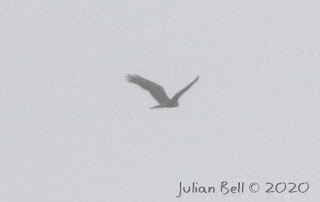
And today that something was a cracking female Marsh Harrier sivhauk that came past at point blank range as I got back into my car at Tjeldstø. I turned for my camera only to find it was still in my rucksack. What a blunder! One day I will have to learn that the camera is no use in the rucksack. By the time I extracted the camera the bird had gained height and was heading south over the reserve. This is the 11th find of this species in Øygarden.


Female Marsh Harrier sivhauk mobbed by Hooded Crows kråke

Marsh Harrier occurrence by week number in Øygarden (from artsobs)

A Merlin dvergfalk also put in an appearance at Tjeldstø.

Common Whitethroat tornsanger at Tjeldstø

Golden Plover heilo

Meadow Pipit heipiplerke at Kollsnes


Lapwing vipe at Kollsnes


Other than that it was very much business as usual during a quick round of localities.


Monday, May 28, 2018

Øygarden 02 May - 15 May - An enforced break

I have been asked if I have given up birding again. The answer is actually no, though I am still going to therapy and taking the pills. A change of job, a confirmation and a bunch of other stuff has resulted in the longest period of not going birding in my entire life.


White-tailed Eagle havørn going for Greylags grågås

Typically the first Greylag grågås chicks were out and about and became the attention of the local White-tailed Eagles havørn. The geese with no young fly around in mad panic whilst those with chicks sit tight and bravely (and most often successfully) defend their young.

Barnacle Geese hvitkinngås heading south past my house on 10 May

Common Tern makrellterne from the terrace on 10 May - first for Øygarden this year

Greylags grågås with young on the sea in


A female Marsh Harrier sivhauk was an addition to the house list on 08 May

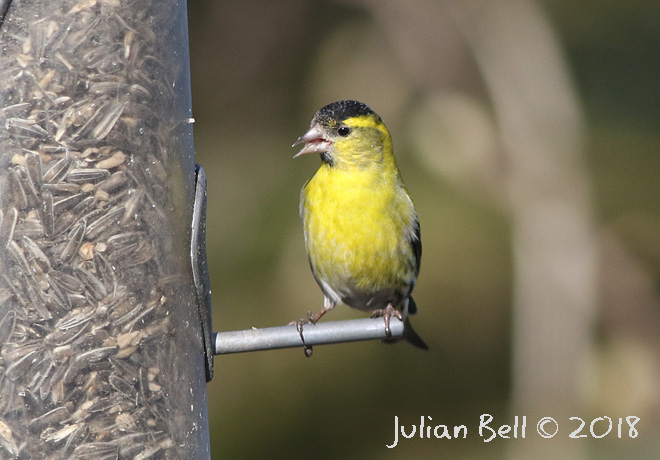
I kept feeding the birds until 15 May. They went through 2.52kg of sunflower seeds a day. Mostly Greenfinch grønnfink, Siskin grønnsisik and Chaffinch bokfink but also Linnets tornirisk and even a couple of Tree Sparrows pilfink which are an unusual garden bird at my house

The garden tried its best to continue to provide interest with a singing Wryneck vendehals on 12 May
On 07 May I had the first Whinchat buskskvett for Øygarden this year - a cracking male at Kollsnes.

I also had my first of the usual migrants in this period including Sand Martin sandsvale, House Martin taksvale, Arctic Tern rødnebbterne and Sedge Warbler sivsanger.